






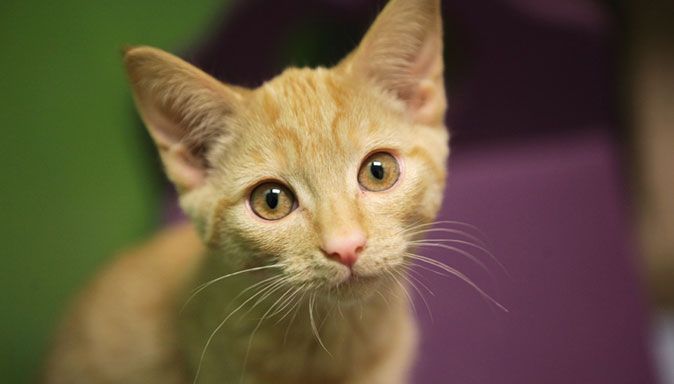
Become a Foster Family
 Homeward Pet’s foster families provide temporary, in-home care to needy animals for a variety of reasons. At this time, our biggest foster needs are:
- Large-breed dogs and puppies
- Dogs with medical needs (e.g. several daily medications, special diets, baths)
- Dogs with behavior challenges (e.g. resource guarding, reactivity to people or other animals, handling sensitivity)
- Cats and kittens with medical needs (e.g. ringworm, diseases contagious to other cats, medication or medical observation)
- Cats and kittens with behavior challenges (e.g. nervous/shy, handling sensitivity, behavioral housesoiling, undersocialization)
- Pregnant or nursing dogs and cats
- Kittens
- Orphaned, unweaned kittens and puppies (AKA “bottle babies”)
If you’re interested in fostering healthy cats and dogs with minimal behavior challenges, we would still love to have you! However, it may take us longer to pair you with a foster animal, as we have fewer of these animals looking for placement and many interested fosters.
We’re happy to provide information and education on fostering animals with specific medical and behavioral needs; you do not need to have prior experience with specific needs in order to foster with us!
Fostering is a great way for families to get involved, especially those with children too young to become volunteers at the shelter. We do our best to make the best match between a foster family and animals seeking foster placement, and every placement is subject to the foster family’s approval and availability.
To get started fostering with us, complete a Foster Volunteer Application.
Foster care is a lot like having your own pet. However, we provide supplies and medical care, and in the end, you send the animal along to their forever home! Fostering is a great option for folks who travel or aren’t otherwise ready to have another pet; families testing the waters to see if pet ownership is right for them; or people who just want to help animals in need!
In comparison, animals in foster homes experience significantly reduced stress, lower risk of disease transmission, and opportunities to engage in normal life. We also get to learn how animals behave in a home, which helps our adoptions team make faster, more successful matches.
Foster volunteers also boost the number of animals we can save. As a small shelter, we have limited space in the shelter; by placing animals in foster homes, we open up space in the shelter for other animals needing urgent assistance.
As an organization that advocates spaying and neutering to help prevent pet homelessness, the pets of foster volunteers should be spayed or neutered. To ensure the health and safety of all animals, pets of foster volunteers should also be up-to-date on core vaccinations.
Fostering is a great way for families to get involved. In most cases, the primary foster caregiver must be at least 18 years of age; however, we also welcome primary foster caregivers 16 years and older with parent or guardian approval, and the understanding that an adult must ultimately be responsible for the animal. Foster caregivers 15 and younger are welcome to participate in care where appropriate, but an adult in the home must be in charge of transporting the animal and communicating regularly with foster staff.
We understand that our foster volunteers have commitments that may interfere with their ability to foster an animal; in the event that a foster family cannot continue fostering an animal, the animal will come back to the shelter, and we will search for alternate foster placement.
Once you have completed these, you will receive access to our Pending Foster Board, where we post all animals looking for foster placement. When you see an animal you feel would be a good fit for your home and lifestyle, email foster staff. Foster staff will review information with you, coordinate with other departments to determine when the animal will be cleared to go to foster, and schedule you with a time to come pick up your foster animal.
If foster families are able to provide their own basic supplies, that saves resources that we can put towards the care of other animals.
Homeward Pet cannot provide financial assistance with pet rent or pet deposits or reimbursement for damages caused by foster pets. Homeward Pet also cannot provide reimbursement for outside veterinary services not approved in advance by a supervisory staff member.
We recommend that your pets be up-to-date on core vaccinations and free from parasites to minimize the risk of contagious disease, and that all pets be spayed or neutered. Foster kittens, cats, puppies, and potentially contagious adult dogs should be kept separate from your pets. We also recommend that you have the ability to separate foster dogs from your pets in the event that it is necessary.
We recommend discussing risk to your current pet(s) with your veterinarian prior to fostering an animal. Homeward Pet cannot provide veterinary care to your resident pets, and if your pet becomes ill from contact with a foster animal, you will need to pursue treatment for your personal pet at your own expense.
Second, check that you’re in a comfortable place to begin fostering. If you’re expecting any big changes, such as a new pet or family member, consider waiting until things have stabilized. Similarly, if you have a resident pet in end-of-life care, consider waiting until they have passed. Confirm that all resident pets are healthy, spayed and neutered, and up-to-date on core vaccinations.
Once you’re ready and signed up to foster, foster staff can provide resources on setting up a space for your foster animal, basic daily care, what to expect in the first few days, and more.
If you have questions about whether fostering is right for you and your home, reach out to us at .



